
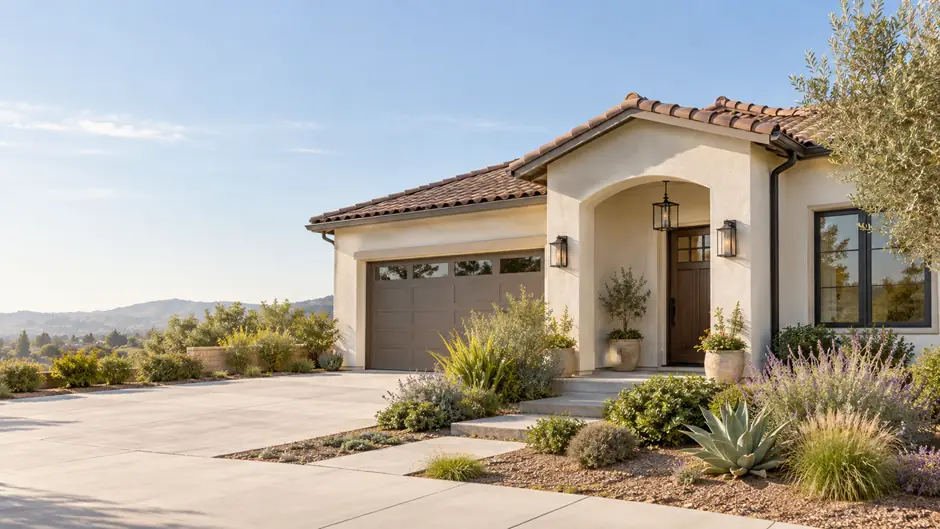
Exterior Painting that Addresses the Condition of Your Home
Although color is the most obvious part of exterior painting, multiple considerations need to be made before a fresh exterior paint job can improve your home.
The general condition of the exterior surfaces needs to be addressed prior to painting. You may have stucco that has developed hairline cracks or has been patched in the past. Perhaps the trim is showing areas of paint loss or peeling. The weathering of wood may have occurred at a different rate than stucco or masonry. Prior coatings may also be in various conditions on the different sides of your home.
Juda Builders offers painting services that address the condition of your home.
We address the surfaces first to understand what, if any, preparation is needed. Only then do we address the selection of color and finish.
A good exterior painting job should make your home presentable without a full restoration.
Not All Exterior Paint Jobs are the Same
Although there are many commonalities between different projects, none are the same.
Your neighbors may have only wanted a newer color scheme, while you may have noticed the peeling of paint, fading, and patched areas that have little alignment along with previously touched up areas that now have little to no uniformity or leaving the trim looking unclean.
Some people paint primarily to address the generally noticeable deterioration of their home after years of natural elements exposure, while others do it to prepare for new construction.
All of these factors collectively help inform and guide the needs of your project.
You may have noticed some of these signs that point to the need for professional exterior house painting:
- excessively faded or unevenly faded paint
- wood trim starting to show signs of wear
- evidence of past spot repairs
- some sections of the exterior of the house that no longer match
- exterior remodeling
- Changes in style
- the lack of a uniform appearance
You want to increase the aesthetic value of your home to improve its curb appeal, but you do not want to embark on a full-scale renovation.
The condition of your home should determine the extent of the project rather than assuming that every house needs the same treatment.
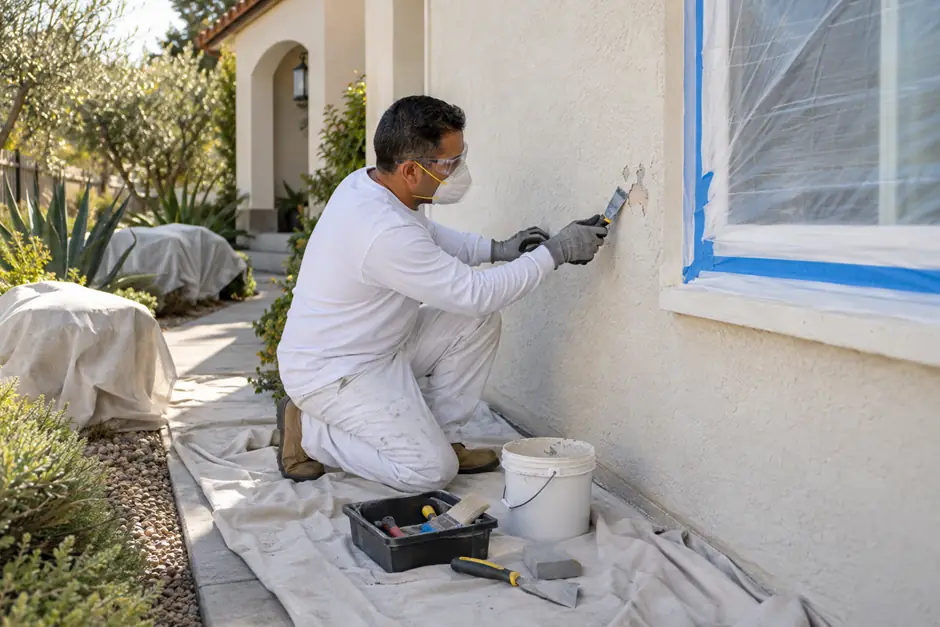
Painting Preparation is More Important Than Many Homeowners Realize
A large majority of the preparation is covered by the new paint job, which may give the illusion that preparation work is less important.
However, paint will reflect what is underneath. So, if there are sections that are old, paint, cracked, dirty, or loose, these will still be problems if new paint is put over them.
The preparation needed for a given surface may vary greatly even on the same property.
There may be different sun exposure levels that affect different sections of the property.
Preparation of different surfaces of the property may include different levels of trim, stucco, and other types of surfaces.
The first step, therefore, is to understand what is being painted.
Preparation is dependent on the surface being painted.
There is no need to prepare every surface the same way for every step.
Cleaning, scraping, caulking, priming and sealing nearby unpainted areas, and addressing minor surface flaws as needed are among the processes that may be necessary for preparing a surface for exterior paint, depending on the project.
There are variations within preparation based on the surface with which you are working.
This is more useful than claiming there is one best way to prepare a surface.
New Exterior Paint Brings a Host of Benefits Beyond Just New Color
A well executed exterior painting project can give a home a great level of curb appeal and bring the elements of design back into a more harmonious and visually appealing relationship, all without the need for extensive construction and without the cost of changing the structure itself.
The benefits of painting project may include but are not limited to:
- refreshing faded and inconsistent surfaces
- improving the overall appearance and looking more fresh
- bringing painted wall and trim elements into painted surfaces
- incorporating other previously done compatible reparative measures
- updating and improving the exterior within an existing framework
- creating a more cohesive relationship between new elements of the exterior and the painted surfaces of the home
Painting a surface is often the most direct and least costly way to change the appearance of a surface, and the main issue(s) is/are finish appearance and/or condition of exterior finish.
If your project involves exterior material changes; revisions to Architectural elements; Entrances; Out-of-home connections; Walls; etc. our Exterior Remodeling service is probably more appropriate.
Painting Stucco Involves More Than Selecting a Color
Because homes in Southern California are often heavily stucco-clad, large sections of the exterior are often comprised of walls of stucco.
Because of this, inconsistencies in stucco preparation and coverage are more noticeable.
Prior to painting stucco surfaces, surfaces must be assessed for their condition, past coatings, repairs, surface cracks, and surface texture.
Surface condition needs to be considered and conditions that require repairs that are incompatible with conventional painting must be addressed.
Surface preparation is important and must be addressed prior to stucco painting.
Stucco, having a texture of its own, needs to be complemented by the surrounding surfaces, and can help inform color selection.
Stucco Texture Must Allow Stucco to be Stucco
Stucco has a visual texture, and good stucco painting preserves and compliments this texture.
Paint color selection, along with selection of color for other surfaces on a home that directly interact with stucco such as hardscapes, roofing, wood and other finishes, also help inform stucco texture selection.
Painted Trim Creates Important Lines
While trim may comprise a smaller part of the painted exterior, it defines many of the home's edges.
Trim in the form of painted details and surrounds complements the primary wall color and may create contrast.
Trim that is in poor condition complemented with fresh wall paint can draw attention to poor trim.
During consideration of what trim will be incorporated in the project, we assess whether trim should be kept, repainted with the same color, or be repainted to harmonize with a new color scheme.
The correct answer is architecture dependent, rather than generally applicable.
Accents Can be Non Distracting
One of the rooms in the home that owners can add a stronger accent color to is the front door.
A front door color that connects to other exterior colors typically looks nice.
However, it can disrupt the exterior if it competes against roofing, trim, stone, or other strong building materials.
You should look at the front elevation of your home before you choose to paint your front door a bold color.
One should also evaluate if there is an emphasis on the entry due to the architecture. If that is the case, the door may not need a bold color to be noticed.
Most of the time, the best exterior color decisions rely on contextual relationships.
Look at Colors Outside, Not Inside
Colors that appear nice indoors can become unappealing outside. You should see colors in natural light to choose a color for the exterior of your home.
For example, natural light makes colors appear either warm or cool. It can weaken or strengthen a color depending on how the light strikes the surface.
In addition, the lighting has a bigger effect on larger surfaces, and color undertones can show up in larger surfaces.
You should look at the materials and colors that will be permanent on your home like the roof, stone, windows, and garage doors to name a few.
You don't have to match your paint to the materials surrounding your home, as long as it makes sense to the materials and colors that will be on the home.
Most homes do not need five bold colors.
Simpler systems are easier to understand.
An example might be a specification of a primary body color, a secondary trim color and an accent color where appropriate.
Some homes require even less.
More Contrast Is Not Always Better
High contrast can successfully highlight certain aspects of a building. Conversely, a building can suffer from too much contrast where every edge and every surface can be overly defined.
It can become a distracting element.
In general, subtle contrast can be a complement to strong architectural and permanent materials.
Where it hits should depend on what should be valued.
Exterior painting should complement architecture instead of competing with it.
Paint Selection Should Match Where It Is Being Used
Consider the sun, temperature changes, moisture, dust, dirt and natural erosion of the surfaces that the interior walls encounter.
That is why exterior painting must be kept separate from our Interior Painting service.
Different surfaces, exposure and differing colors create a myriad of considerations for coating systems.
It is important that different parts of the same building require different products. There is no point in convenience if the surfaces require something different.
Exterior surfaces are much more exposed than interior walls and will deteriorate over time.
Exterior painting happens around windows, roofs, walkways, plants and patios.
All of those finished or partially finished surfaces are part of the project. They require protection.
Landscaping deserves care.
A painting project should not ruin the appearance of a homed by leaving excess paint on windows, hardscape, fixtures, and surrounding plants.
Finished nicely organized rooms make the final result worth the effort.
Knowing When Painting Is Enough
Knowing to remodel versus paint is an important decision that homeowners should know.
There are plenty of reasons to hold off on an extensive renovation, and appropriately long paint jobs is one of the more common reasons.
Thinning paint will over time make colors dull, and along with material aging can give an ill appearance to the house. Even with poor architectural choices, an appropriate painting of the house, redoing functional entries and removing obsolete colors can have a positive impact.
It is much more cost effective to paint where construction is not needed as opposed to the other way around.
There are many situations where it would make sense to paint:
- There is an appropriated material that does not need to be changed.
- There are no major layout problems.
- There are no major structural changes to the exterior.
- There is a well functioning entry to the house.
- A fresh coat of paint would improve the color.
- New construction would benefit from a consistent final finish.
It is important to maintain appropriate distinctions for these situations so that the proper scope is accessed.
Knowing When the Project Becomes Exterior Remodeling
Painting is not the solution to construction problems.
If you are wanting to alter the materials of the exterior, redesign the entry, rework the exterior to address transitional issues, make changes to architectural features, or coordinate significant hardscape and exterior construction, then the project has extended beyond painting.
This would fall under the service of exterior remodeling.
Exterior painting should be done as a finish to painted surfaces and coating renewal. Exterior remodeling is the service that addresses the other physical changes to the exterior of a structure.
Painting After Other Exterior Improvements
Exterior painting should be done after other exterior construction.
Painting too early could create extra, avoidable work with finishing touches.
This applies to trim, wall, door, and other adjacent surface finishes.
We can take care of exterior painting as part of the finish work on Full Home Remodeling or Exterior Remodeling projects that we're doing instead of working on it as another unrelated job.
Planning the sequence of different work means they can complement different improvement projects.
Roofing and Exterior Paint Should Coordinate
Roofs are a big part of the overall exterior of your home.
If the roof stays, its color should help inform the choice of the paint colors.
If roof work is being done, think about the two projects together before making color decisions.
The roof has a big impact on how the exterior of your home looks. Its color and style can impact other exterior surfaces like siding, stucco, trim, doors, and other visible surfaces. If the roof needs work, we do roofing, roof replacement, and roof repairs.
What determines the cost of exterior painting?
Before we can give an estimate for exterior painting, we need to do an inspection of the property.
Exterior size is important, but it is only part of the job estimate.
Two properties with the same size can require very different preparation depending on the access, the surfaces, the trim, the finish, the height, the number of colors, the style, and the ease of working on the property.
Cost is influenced by:
- total area to be painted
- number of stories
- how accessible the surfaces are to be painted
- panels made of stucco, wood, wood trim, or similar
- how the existing coatings are
- how much work is required to be done
- the number of colors
- doors, fascia, eaves, or trim
- the extent of work needed to be done for masking and protection
- how much priming is required
- how much work is needed for material selection
- complexity of the architecture
A good approximation should provide an analysis rather than just a final cost.
This helps the client understand why one painting estimate is lower or higher than the other estimates.
Painting the Exterior of a Home Has Many Steps
Painting the exterior of a home has many steps, and explaining that process can help the homeowner understand the overall scope of the project.
- 01
Review Exterior
We analyze the proposed areas for painting and consider the condition of the existing coatings, the surface types, access, and the level of preparation necessary.
- 02
Define Painting Scope
We determine the extent of the project based on the finished walls, trim, doors, and other painted elements.
- 03
Prepare and Protect
We protect the surrounding areas and perform all necessary preparations for the project.
- 04
Address Priming and Coating Requirements
Based on the condition and the surface types, we determine the methods for applying the coating, rather than assuming each surface is the same.
- 05
Apply Finish
Once the coating methods are determined, we apply the selected finishes for the project.
- 06
Review the Work
We review the project against the scope and address finishing touches as necessary.
The process should be simple enough for the home owner to understand.
You should know what is being painted, what is being prepared, and what the final outcome is.
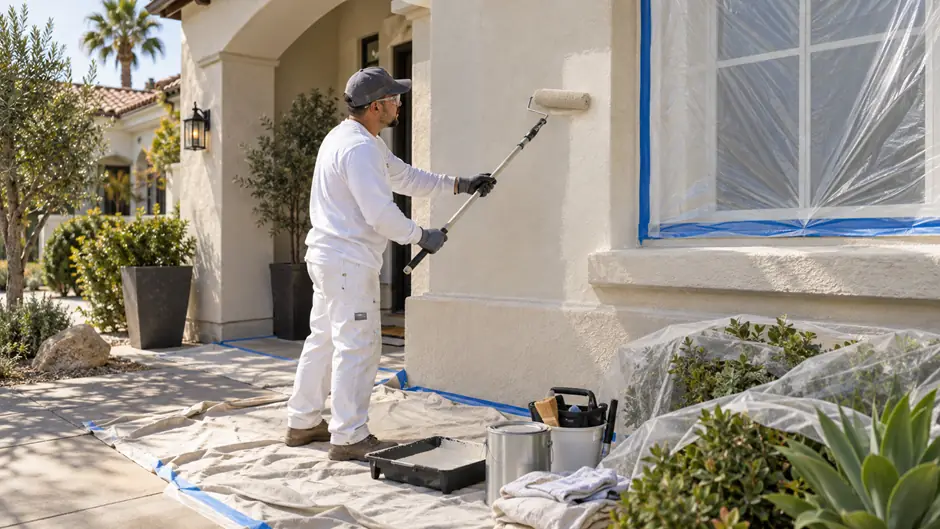
What to Look for in Exterior Painters
As with any service, prospective customers compare prices.
So should you with exterior painters.
That said, the scope of the work is just as important as the price.
You should find out about the preparation, what surfaces, what trim, what doors, what is covered, what is included, how different exterior materials are handled, and what is excluded.
A good conversation should help clarify everything.
Exterior Painting FAQs
-
The answer to this depends on the property being painted.
It could be all external wall surfaces, all stucco, appropriate trim work, fascia, all doors, all other exterior painted surfaces, necessary preparation, masking and covering work, applied primer where needed, and top coating.
-
Many factors contribute to the cost of exterior house painting. These can include the square footage and height of the house, the type/condition of existing surfaces, the amount of preparation required, trim and detail work, number of colors, selections of finish coats, degree of accessibility, and the overall project complexity.
-
You should paint your house when the existing paint begins to fade, when you no longer like the existing color, when previously painted areas begin to deteriorate and peel, or when you see consistently poor repairs.
-
Stucco can be painted, but the existing stucco and paint may be a factor as they will predict the outcome. So cracks, prior repairs, stucco texture, and the number of coats of paint will find determine the outcome and the amount of work required.
-
Prior to painting, evaluate the surface condition. Some conditions may be considered appropriate while others require additional work. Do not use touch up paint to conceal a condition which requires repair.
-
Consider what will be permanent. Permanent materials include roofing, stone, hardscape, and masonry.
-
House color and trim color can be the same or different.
-
Yes. An accent door looks great as long as the color supports the overall exterior color scheme. The entry should be looked at not only with the front door, but also the color of surrounding trim, wall color, roof, hardscape, and landscape.
-
Yes. Exterior painting refreshes and protects finished paintable exterior surfaces. Exterior remodeling includes major changes to the exterior of a structure such as change of exterior walls, change of exterior finishes, exterior design elements, outdoor access and connections, and exterior construction.
-
Yes. Painting can be done as a final stage of a remodel which includes work that alters exterior surfaces or finishes.
-
This depends on the work to be done. If the roof work will touch painted surfaces and the color of the roof will influence the exterior color scheme, then coordinating the work before the final coats of paint makes sense.
-
This is dependent on the size of the property, prep work, surface conditions, access, number of colors, and weather.
-
This is highly variable and dependent upon surface conditions and preparation, exposure, weather, workmanship, maintenance, and coating systems.
-
Not necessarily. Primer is dependent on the overall conditions and coating to be used. The work should be evaluated on a case by case basis and not as a firm rule.
-
Painted wood or trim can be part of a whole exterior paint job, but before this can happen we need to assess the condition and also prepare it accordingly.
-
Contact Juda Builders with pics of the exterior of your home and let us know how you would like to see it changed. We also need to know what the primary concern is. If it’s fading or peeling paint, is it from poor repairs or a prior construction project, is it the color or trim, or the overall painting of the exterior?
Ready to Give Your Exterior a Cleaner Direction?
You do not need to have the final color selected to contact us.
Start with the house you currently have.
Tell us what surfaces appear faded and uncoordinated, what has already been modified or replaced, what you want to retain, and if painting will be part of an overall plan to change the outer appearance of your home.
Based on that information, Juda Builders can help describe a workable scope for exterior painting.