
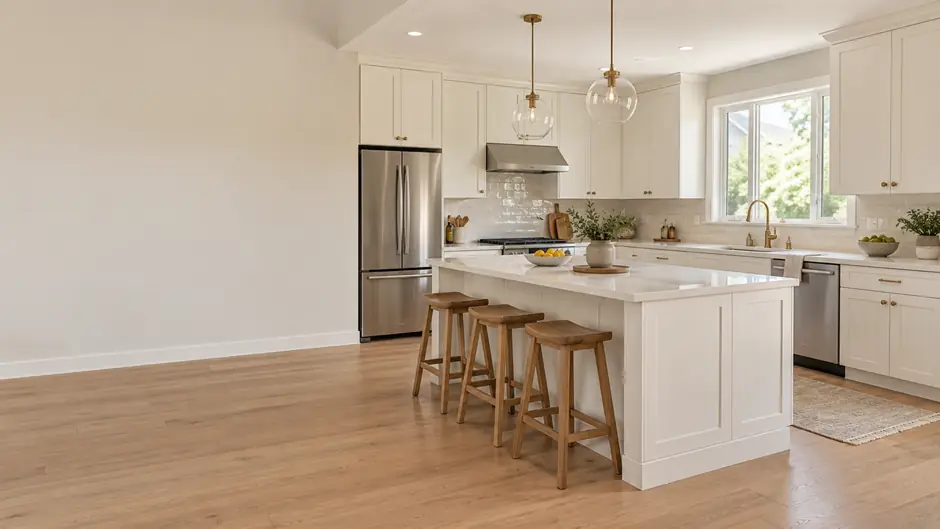
Cabinet Painting That Doesn’t Require New Cabinets
Outdated cabinets can age the look of your kitchen or bathroom, even if you've kept the rest of the room updated.
Maybe the boxes remain solid, the layout makes sense, and there is no reason to replace everything. The issues could be older finishes, cabinetry that no longer compliments your countertops, or scratched surfaces.
Cabinet refinishing is a budget-friendly option that helps you achieve some of the aesthetics of new cabinets.
Unlike many contractors, Juda Builders looks at the cabinets and considers the drawers, doors, cabinet material, and the finish as well as the room before suggesting painting as a Potential option.
It is not about slapping on a new surface coating. It is about creating an attractive, clean space.
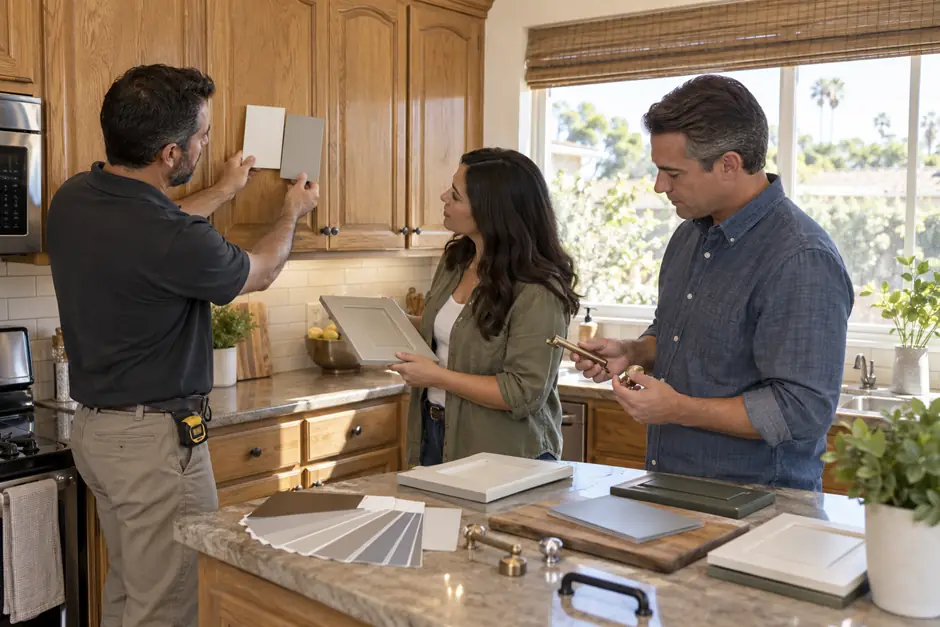
Start by Deciding Whether Your Cabinets Are Worth Keeping
Not every older cabinet needs to be replaced.
If the cabinet boxes remain functional, drawers and doors work as intended, your storage still functions for your household, and the overall layout works for your room, then painting would be a great option to update your cabinets.
Most homeowners think about cabinet painting because of:
- outdated cabinet colors
- faded or worn painted finishes
- dark cabinets that weigh down a room
- surface level scratches and normal wear
- cabinets that no longer match your new flooring or counters
- dated, yet functional, bathroom vanities
The important thing is, are your cabinets actually candidates for new finishes?
If your actual problem is poor storage, damaged cabinets, or a poor layout, a larger kitchen or bathroom remodel may be the better option.
Cabinet Painting is Preparation
Cabinets aren't like walls.
They get opened and closed constantly. Kitchen cabinets get cooking residue and moisture on them which gets cleaning products on them. Sanding and prep work is crucial to the entire project.
A good color does not cover poorly done prep work.
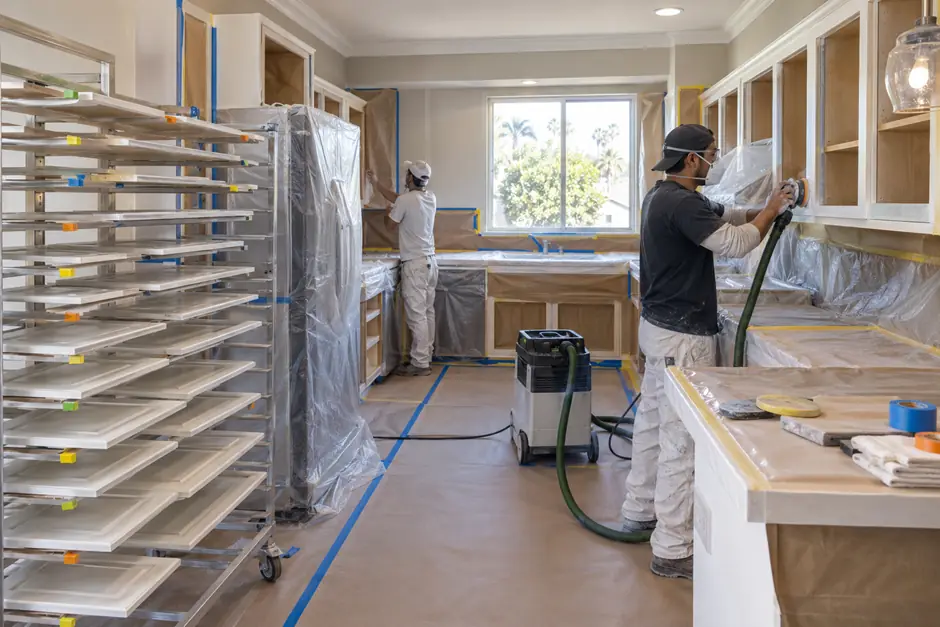
Depending on the finish and the surface of the cabinets, you may need to clean the cabinets, remove the hardware where needed, address small imperfections, dull previous coatings with sandpaper, trim and detail the edges and apply primer where needed.
The process can be different for every cabinet, so it should be project specific.
The Finish Matters
Painted cabinets require different prep work than stained wood.
If you have cabinets with a poor or poor quality bonded coating, this may be a different type of prep work than a dated coating that is still good.
This is why it is vital to consider the existing surface before color and finish selections are finalized.
Benefits of Painting Existing Cabinets
Painting your cabinets can be a good solution for homeowners who want to improve the appearance of their kitchens and bathrooms that contain operational cabinets.
Cabinet layouts do not need to be replaced. Owners can concentrate their efforts on improving the appearance of the surface by painting, etc.
Some of the benefits include, appearing to have:
- a nice updated kitchen
- quality operational boxes to cabinets
- updated cabinets that compliment new flooring, countertops etc.
- improved surface finish
- lighter and more comfortable rooms
- avoiding the purchase of new cabinets that are not needed
Increasing functionality is the added benefit.
If the cabinets are working as intended, it doesn’t warrant replacing them because the finish is dated.
Painting Kitchen Cabinets
When it comes to painting kitchen cabinets, a large visual impact is the greatest benefit that is realized the most.
Cabinets are a large focal point of the room and painting cabinets, unlike a wall, does not require moving shifting plumbing, cabinets, appliances, etc.
Consider each cabinet’s paint color in relation to the other finishing materials that will remain such as countertops, backsplash, flooring, appliances, wall color, natural light, etc.
A color that looks great in a sample can become problematic when it is placed next to warm stone, cool natural surfaces, or dark flooring.
The cabinets should complement the room and connect to the other finishing surfaces, rather than feeling like an afterthought or unrelated.
Choosing Non-Traditional Colors for Kitchen Cabinets
While kitchens can benefit from updated cabinets, they can also be improved in many other ways.
The type of cabinets you should pick depends on the cabinets you already have as well as other things like the type of materials in the room.
You may have a cabinet type and color that would work in your kitchen.
Painting Bathroom Cabinets
Cabinets in the bathroom can become candidates for painting when they are still structurally usable.
If the floor, countertop, or wall in the bathroom is recently done or if the tile is changed, painting the cabinet instead of replacing it can become an economical way of changing the overall look.
Painting cabinets should first consider the cabinet that is being painted and the surfaces that accompany the cabinets.
Depending on the cabinet and bathroom layout, painting cabinets can be an ineffective way to improve a bathroom.
Finish on Cabinet Doors and Frames
Cabinet painting can have more meaning than just the large doors of the cabinets.
The interior frames need to be finished as do the side and edge surfaces.
When those surfaces are not painted, the cabinets can feel unfinished and left undone.
The project should show how all of these surfaces will be addressed, including the intricate door frames that can be exposed.
Can Wood Cabinets Be Painted?
Painting cabinets is a cost-effective way for some homeowners to replace their wood cabinets.
How much preparation wood cabinets require, or whether they can even be painted, depends mainly on the type of wood, the cabinet's condition, its finish and previous work and last but not least the durability of the new finish that is desired.
In general, wood cabinet preparations usually involve filling the grain, sanding to remove any thick coatings, and/or stains, as well as repairing previous work. This may also vary depending on the finish desired.
Veneers and other surfaces of a cabinet also may require similar preparations.
There is no one size fits all when it comes to wood cabinets. Understanding the nature and varying conditions of every wood cabinet is very important in determining the proper method and preparations.
Plan Cabinet Color Around the Whole Room
Everything in a room works together to create a harmonious effect and changing the color of cabinetry is a major change that can disrupt harmony.
Countertops, backsplash, flooring, wall colors, appliances and the hardware, natural and artificial light, and even rooms adjacent to the cabinets can affect the new color of your cabinetry.
A dark-to-light change may make the room feel very different, but it can also make cabinet profiles, gaps, or surrounding materials more noticeable.
A darker color may add depth but can feel heavier if the room already has limited natural light.
The color should solve the visual problem you actually have.
Finish and Sheen Affect the Final Look
The finish of a cabinet also impacts its final appearance. Wood cabinets reflect light and can impact the final look of the cabinet. A highly reflective or shiny finish may draw attention to imperfections while a dull finish may achieve a more unified finish.
The combination of color and finish also impacts the final aesthetic of the cabinets.
When choosing a finish, the cabinets should accent the style of a room and fit the needs of that space.
Sprayed, Brushed or Rolled Cabinet Finishes
Customers Ask About Sprayed Cabinets a Lot.
That question is more complex and is generally project-dependent.
Site conditions and the finish to be applied often dictate the finish system.
Spray may be more appropriate to apply a uniform finish to certain elements of a case, while other areas may require a different technique due to access or configuration.
The goal should not be to sell one tool as the champion.
The finish should be dictated by the surface, coating and desired finish.
Hardware Can Complete the Update
Having the cabinets painted can make the hardware stand out and can even make a case for replacing the hardware.
Old hardware can clash with a new and fresh color, but simply changing the hardware can update the look.
Consider the placement and spacing of holes.
Changing out hardware can be more bothersome due to replacement hardware requiring new openings to be drilled.
It is better to resolve openings during the planning stages instead of after painting is done.
Cabinet Painting vs. Cabinet Refinishing
Cabinet painting and cabinet refinishing are used synonymously by many customers.
Refinishing can include painting, but is more complex and can involve removing existing finishes completely.
The definition of refinishing can include redefining or just restoring a previous finish. It can include instances where a homeowner wants to retain wood’s natural appearance as opposed to covering it over.
Painting may be a viable option if you are after a solid color finish.
If retaining the wood appearance is vital, then perhaps some other form of refinishing will suit your requirements better.
Cabinet Painting vs. Refacing
Refacing goes beyond changing the surface coating.
Refacing can include replacing or covering visible components of the cabinet framework while leaving the majority of the original cabinets intact.
Painting involves finishing work and leaving the original cabinet components intact.
If you are satisfied with the style of the cabinet doors and are after a new color, painting may well be the option.
If the style of the doors feels really outdated, then a new color may not provide the overall impact that you are after.
Cabinet Painting vs. Replacement
Painting makes more sense if the cabinets are not beyond keeping.
Replacement becomes more necessary when the layout of the cabinets as a whole is not workable, there is not enough storage, there are major worries of damage, or if you are completely changing the layout of your kitchen.
Why Painting May Work:
- Layout of painting makes sense
- Storage works
- Cabinet boxes work
- Drawers and doors work
- Lastly, color and finish is most important
Why Replacing May Work:
- When layout is a main issue
- Storage is bad
- Cabinets are bad
- Appliance planning/locations are bad
- When part of a new or remodeled space
Focus on the real big issue and then consider painting vs replacement.
What Determines a Cost for Painting Cabinets?
Homeowners want to know cabinet painting cost, and while a quick estimate can be made by considering the door count, more factors are usually involved.
Two kitchens can have the same count of cabinets, but that doesn’t mean they will require the same level of preparation.
Factors that affect the price can include:
- Size and number of doors
- Size and number of drawers
- Framed and exposed cabinetry
- Cabinet material
- Existing finish
- Condition of the surface
- Level of preparation needed
- Style and detail of doors
- Desired change in color
- Type of primer and coating
- Handling of hardware
- Limited repairs
- Complexity of the cabinet painting process
A small bathroom vanity and a large kitchen with an island are two very different examples.
A project specific estimate is more helpful than a per door price.
Our Process for Painting Cabinets
A planned procedure for painting cabinets makes the process easier and predictable.
- 01
Assess the Cabinets
We evaluate the cabinets materials, the finish, the current level of wear, the doors, the drawers, the frames, and the required result.
- 02
Estimate the Scope
This step confirms the cabinets that will be painted and the surfaces that will be painted.
- 03
Cover the Surrounding Work Area
Counters, floors, walls, and surrounding surfaces are covered with a drop cloth.
- 04
Surface Preparation
The level of preparation of the cabinet surfaces is based on its condition and the existing finish.
- 05
Primer Application
Primer is applied where needed for the selected system of finishing.
- 06
Finish Application
Coatings are applied based on the project and the required finish.
- 07
Reassemble and Review
Doors, drawers, and hardware are returned to their positions. The project is reviewed to ensure final touches.
Homeowners should have an understanding of the process at each stage rather than only at the end.
Caring for Painted Cabinets
Newly painted cabinets should be taken care of according to each coating type.
- abuse with scrubbing or hard bristled cleaning tools can damage many sealed surfaces.
- for daily cleaning should involve minimal abrasion. Highly soiled and cooked on foods should be removed before allowing a build up to occur.
The appearance of painted cabinets after many years will depend on the degree of use and the cleaning and maintenance habits which also depend on preparation and the type of coating used and the quality of the cabinet.
Each project should be treated with an understanding of the expected lifespan.
Cabinet Painting as Part of a Kitchen Update
While painting cabinets is a focused project, it can be planned to coordinate with other small projects.
A homeowner may be changing wall paint, lighting, countertops, backsplash, flooring, or even hardware while keeping the existing wall layout.
When preparing for painting, the cabinet color should be selected to complement the rest of the changes.
If the project becomes a major wall layout change, new cabinets, plumbing, or major wall or floor construction, it should be thought of as a complete kitchen remodel and should be treated as such.
This distinction should remain clear to homeowners to eliminate unnecessary work.
Cabinet Painting in Van Nuys
For Van Nuys homeowners who wish to refresh cabinets, Juda Builders provides cabinet painting service. As cupboards are considerable and cumbersome, painting cabinets is a money-saving solution to refurbishing a kitchen or bathroom. Our painters take care of every detail, from cabinet preparation to finish application, to ensure clean and updated cabinetry that is still functional.
With our experience, the appearance and condition of each room’s cabinets, as well as the surrounding finishes are important considerations when selecting a paint color.
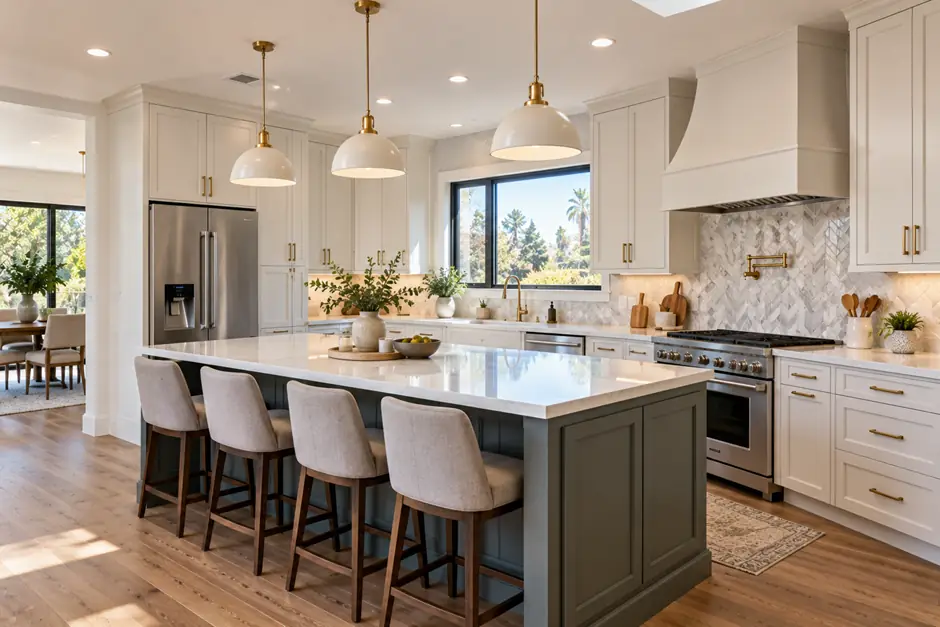
Choosing a Cabinet Painting Contractor
Not directly painting cabinets requires a deeper level of experience than most contractors possess.
Preparing the cabinets involves planning what components will be painted and how drawers and doors will be addressed. This also involves planning what surfaces will be protected from paint, what finishing approach will be used, what, if any, damage control will be implemented, what the finished cabinets will require for upkeep, what will be the cost of leaving the project unfinished, and what the project excludes.
Cabinet Painting FAQs
-
Absolutely! Cabinet painting adds value to your home and is a good option to consider if you need a new color or finish on your functional cabinets. It is not a good option if there are significant concerns regarding the layout, storage, or conditions of the cabinets.
-
Painting can be an option to consider for older cabinets. Paint adhesion will be dependent on the material and finish, as well as the condition of the cabinet.
-
Wood cabinets are also paintable, as long as the process is done properly. The existing stain, as well as the surface of the cabinet, will need to be accounted for during the preparation process.
-
The price of cabinet painting is based on the number and size of cabinets, the style of the doors and frames, preparation, the color change, the finish that is applied, and the overall complexity of the project.
-
The time a project takes to complete will be based on the size of the project, the number of components, the coatings, the application method, and the existing conditions of the surface.
-
Painting is a less expensive option than full cabinet replacement. However, if the cabinets are dysfunctional, painting is not going to correct that.
-
Painting opaquely colors surfaces, whereas refinishing may include changing and restoring a finish to a wood appearance.
-
Refacing is trendy if you're looking to change the style of your cabinets because painting would only suit the existing style. If the existing style remains, painting could work.
-
Sure. The preparation, primer, and coating should be easier with only a small change like that.
-
It really depends on the style you're aiming for and how accessible the cabinets are.
-
It depends on the method, but doors and drawers usually need to be handled separately.
-
Painting bathroom cabinets is possible as long as the cabinet and its finish is in good condition.
-
Absolutely, new hardware needs to have the same sized spacing as the old hardware.
-
The care instructions for the coating that was used is the best guide to follow. Cleaning with mild soap is going to be safer than abrasive, harsh products.
-
How long they last also depends on how they are cleaned, what they are used for, and the condition they are in.
-
Please send Juda Builders an email with photos of your cabinets and a brief explanation of the changes you want done. Include your main concerns such as final finish color, worn finish, damage, hardware, etc. or if your main concern is the layout of the cabinets.
Ready to Refresh Your Cabinets?
You don't have to research whether painting, refinishing, refacing, or replacing cabinets are the best options before calling.
Unfortunately, considering the as-is condition of your cabinets, the best method of addressing an issue can be as simple as a call to Juda Builders.